
Have you ever wondered why ancient humans claimed to hear voices from gods or spirits? How do these experiences connect to modern mental health conditions like schizophrenia? Julian Jaynes, a distinguished psychologist, introduced the intriguing concept of the bicameral mind in his seminal 1976 work, The Origin of Consciousness in the Breakdown of the Bicameral Mind. Jaynes posited that our ancestors, even as recently as ancient Greeks, attributed emotions and desires not to their own minds but to the influence of external gods. This mental functioning was widespread about 3,000 years ago during the Bronze Age. Jaynes suggested that ancient humans perceived their thoughts as auditory hallucinations, where one part of the brain “spoke” and the other obeyed, much like prophets in the Bible followed divine commands.
“For the Lord giveth wisdom; and understanding and knowledge cometh from his mouth.”
— Proverbs 2:6 (KJV)Jaynes theorized that as societies grew more complex, the bicameral mode of thinking became ineffective. Ancient civilizations faced significant challenges like migrations and environmental shifts, requiring a more adaptive and self-aware form of cognition. The necessity for flexibility gave rise to modern consciousness, fostering a demand for self-examination and contemplation. This transformation was not just neurological but also cultural.
Jaynes’ theory generated a significant stir across various fields, including psychology, philosophy, and the arts. Renowned figures like writer Philip K. Dick and musician David Bowie found inspiration in his ideas. The concept of the bicameral mind even made its way into pop culture through shows like “Westworld,” exploring themes of consciousness and control in artificial beings.
The Bicameral Brain in Artificial Intelligence
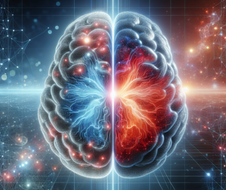
The concept of a bicameral brain in artificial neural networks is inspired by the structure of the human brain, divided into two hemispheres specializing in different functions. This idea has been explored in machine learning to create models that mimic this division, potentially enhancing their performance. Researchers have proposed building a bicameral machine learning model with hemispheres resembling the biological counterparts. This involves creating two parallel systems with different specializations, similar to how the left and right hemispheres of the brain function. The goal is to leverage the strengths of each “hemisphere” to improve overall performance in tasks such as pattern recognition and decision-making.
Studies have shown that training artificial neural networks to mimic the brain’s processing of visual information can make these models stronger and more precise. For example, a model trained to work like the brain’s inferior temporal cortex, crucial for object recognition, was better at identifying objects in images, even when distorted. This approach not only aims to improve the capabilities of artificial neural networks but also helps neuroscientists understand the brain better by providing hypotheses about how the brain processes information.
Brain-Inspired Learning in Artificial Neural Networks: A Review
The peer-reviewed paper behind this section — how machines are being taught to learn the way the brain learns.
↓
The theory of the bicameral mind is intriguing, though it faces criticism. Philosopher Ned Block thinks people were always conscious but just couldn’t explain it. Critics also say there’s no solid proof for the theory. However, new research suggests that hearing voices might come from the brain’s right side, which somewhat supports Jaynes’ idea.
Bicameral Mind Theory and Insights into Schizophrenia
The bicameral mind theory provides valuable insights into schizophrenia, a complex mental disorder characterized by symptoms such as hallucinations, where individuals report hearing voices or experiencing thoughts that feel external to themselves. This aligns with the auditory hallucinations described by Julian Jaynes. Over the centuries, our understanding of schizophrenia has evolved significantly. Historical records suggest that symptoms similar to schizophrenia were present in ancient times, lending support to Jaynes’ Bicameral Mind theory. Although “schizophrenia” is a relatively modern term, its conceptualization began to take shape in the early 20th century. Interestingly, religious texts often depict individuals hearing voices or experiencing divine visions, echoing symptoms we now associate with schizophrenia.
Understanding the role of culture and society in shaping mental health conditions like schizophrenia is crucial. The transition from a bicameral mind to modern consciousness involved significant cultural shifts. These shifts influenced how individuals perceive and interpret their thoughts and experiences.
The exploration of the bicameral mind theory and its connection to schizophrenia opens new avenues for research. By examining the historical and cultural context of consciousness, we can gain valuable insights into the nature of mental health conditions. Integrating the principles of the bicameral mind theory into therapeutic practices can offer new perspectives for treating schizophrenia. By understanding the historical, religious, and cultural context of auditory hallucinations, therapists can develop more tailored interventions.
Conclusion
The intersection of ancient cognition and modern mental health offers a compelling framework for further exploration. Whether you are a mental health professional, a science enthusiast, or a psychology student, contemplating these ideas can deepen your understanding of human consciousness. Jaynes’ theory of the bicameral mind provides a unique perspective on the evolution of consciousness and its implications for mental health. By exploring these connections, we can better understand the complexities of the human mind and develop more effective approaches to mental health care.

Leave a Comment
Share your thoughts, questions, or reflections below.
You May Also Like



Exploring the profound connection between schizophrenia and the gift of prophecy. Revealing biblical truths hidden in plain sight and bringing hope to those who hear the audible Word of Christ.
“To open the blind eyes, to bring out the prisoners from the prison.” — Isaiah 42:7