Can You See it Now?
"For in him we live, and move, and have our being."
— Acts 17:28 (KJV)Hollywood showed us what was coming. Over and over again. Before it happened. With an accuracy that defies random chance.
In 2000, The Simpsons aired an episode in which President Lisa Simpson complains about the budget crunch she inherited from President Trump — sixteen years before he was elected.
In 1996, The Long Kiss Goodnight contained dialogue referencing the World Trade Center bombing and a planned mass casualty terrorist attack blamed on Muslims — five years before 9/11.
In March 2001 — six months before the towers fell — the pilot episode of The Lone Gunmen depicted a plot to fly a commercial airplane directly into the World Trade Center.
In 2011, Contagion depicted a bat-originated virus spreading through respiratory transmission — which is exactly what they blamed for COVID — causing global lockdowns, mass death, and a worldwide race for a vaccine. Nine years before 2020. And to this day, they cannot find the source.
In 2002, Minority Report depicted two things: a police system that predicted crimes before they happened and arrested people for them — and advertising that scanned your identity and targeted you as you walked through public space. We built the first one and called it predictive policing. We built the second and called it targeted advertising. Both are real. Both are here.
In 1968, 2001: A Space Odyssey depicted flat tablet computers used to read the news and to watch videos. The iPad arrived in 2010.
This one is important.
Released in 1999, The Matrix placed the birth of AI in the early 21st century. Then it showed what could come after.
Fields of human beings, grown in pods. Not born. Produced. Gestated in fluid-filled tanks, wired at the skull into a simulated world, living out whole lives inside a lie while their bodies lay in rows. The dead were liquefied and fed to the living through a tube. And the world as we know it was dead.
The sky went black. Not by accident, and not by anything the machines did. Men did it to themselves.
The machines ran on sunlight. So men filled the atmosphere and blotted the sun out — the whole sky, everywhere, for good. The idea was to starve the machines of the one thing they could not do without. Solar power.
The word for that is scorched earth. You burn your own ground so the enemy advancing across it finds nothing to eat. Armies have done it for three thousand years. It works, and the price is that you have burned your own ground.
They did it to the sky.
History proves it can be done. In 1815 a volcano named Tambora erupted in Indonesia and put enough ash into the atmosphere to dim the sun across the northern hemisphere. Crops failed. Snow fell in June. They called it the year without a summer, and it came from one volcano.
Men have been trying to do it on purpose since 1974. There is a name for it now — stratospheric aerosol injection — and the scientific papers say outright what it copies. It aims to mimic the cooling effect of explosive volcanoes. Sulfur into the stratosphere, sunlight reflected back into space. In 2025 the British government put fifty-seven million pounds into researching it.
But blotting out the sun did not stop the machines. They found another power source. What it did stop was everything else. No sunlight means no plants. No plants means no animals. No green thing anywhere on the surface of the earth.
And what most people forget about the film is that the machines were not keeping those people alive out of mercy. When men burned the sky, they cut off the machines’ power — so the machines turned to the bodies. They were feeding on them.
Morpheus, the character who freed Neo from the Matrix, explains it to him while holding up a battery: “The human body generates more bio-electricity than a 120-volt battery and over 25,000 BTUs of body heat. Combined with a form of fusion, the machines had found all the energy they would ever need.”
That is what the pods are. Not prisons. Cells. The people are part of the power supply. That is why the dead go back into the living through the tube — fed to the ones still breathing, to keep the current running.
And before you set that down as impossible, know that it is being built.
They are called glucose fuel cells. They are implanted in a body, they take glucose directly out of the fluids, and they turn it into electricity. The first working one was put into rats and ran while the animals walked around. The purpose is to power medical implants without batteries — a device that feeds on the person it is inside, for as long as that person lives.
There are others. Thermoelectric harvesters that generate current from the difference between your body heat and the air around you — Morpheus’s twenty-five thousand BTUs, being worked on right now. And a patented microbial fuel cell that puts baker’s yeast inside a person, eating glucose, so a machine can run on what it produces.
But this is the one.
A team designed a glucose fuel cell built specifically to power an implantable brain-machine interface. The paper says where the fuel comes from. Cerebrospinal fluid. The liquid around the brain — the same fluid the cable in that film went into the spine to reach.
A chip in a skull, drawing its power out of the fluid around the brain it is reading.
I will be straight with you about the scale. What is being built today produces microwatts — millionths of a watt. Enough to run a sensor, not a city.
And the film has been criticized for exactly that. Physicists have been picking at Morpheus’s line for twenty-seven years. You cannot run a world on people, they say. It takes more energy to keep a human body alive than you will ever pull out of it. The arithmetic does not work.
They are right about the arithmetic. They are answering a claim the film never made.
Read the whole sentence. Combined with a form of fusion, the machines had found all the energy they would ever need.
Combined with. The bodies were never the whole supply. They were the difference. The machines had fusion doing the heavy work, and something was still short, and what they used to close the gap was us.
That changes the math entirely. A body does not have to power a city. It has to add. And a field of them adds more, and fields of fields, farmed and replaced and fed on their own dead, add whatever the fusion could not reach.
The critics read one clause and stopped. The sentence keeps going.
Machines drawing power out of living human bodies is not a metaphor and it is not a prediction. It is a funded field of research, with working implants in animals, and one design aimed at the inside of a human skull.
What Sits Between You and the World
And here is what most people miss.
The people in the pods were not robots. They were not puppets. The system did not reach into their minds and move them. It did something quieter, and worse. It left them fully themselves — their consciousness intact, their will their own — and gave them a false world to spend it in.
They made their own choices. They fell in love. They went to work, argued, ate, grieved, chased what they wanted. They were awake inside their own minds, genuinely alive, genuinely choosing. Every soul in those fields was a real person with a real consciousness — the breath still in them, the God-given “I” still looking out from the mind behind the eyes.
Think of two of them. Call them Joe and Megan. Inside the Matrix they meet, and talk, and fall in love — a whole life together, real to both of them, every moment of it genuinely lived. But their bodies never touch. They never occupy the same room, because there is no room. Joe’s body is in a pod in one field. Megan’s is in a pod in another — miles away, maybe a thousand miles away, neither one knowing the other’s flesh is nowhere near. Two real people, two real minds, meeting inside a world that is not there. The love was real. The two of them were real. The place they met was rendered.
The film proves this through the ones who broke free. When Neo re-entered the system, Neo was still Neo — his own mind, his own will — meeting a real Morpheus who was just as himself. Two real people, fully themselves, inside a world that was not there. The system rendered the room. It did not render the men.
The prison was never the mind. It was the world.
Now think about where that already lives in our world.
It started more than twenty years ago. In 2003, four years after The Matrix was released, a company called Linden Lab launched Second Life — a virtual world where people make avatars, second selves, and live inside it. They build homes, run businesses with a currency that trades for real money, hold weddings, fall in love, form whole communities. Not a game — there is no goal, no winning. Just a second life, lived on a screen, by people whose real bodies sit in chairs somewhere else.
It is still running today, with hundreds of thousands of people still inside it.
Then came the headset — the Matrix itself, essentially. Not the pod that holds the body, but the system that feeds it the false world. Meta Quest. Apple Vision Pro. PlayStation VR. You put it on and your senses are handed a rendered world: your eyes and ears are told they are somewhere they are not, while your body sits still in a room. That is The Matrix in consumer form — not the cage, but the simulation piped into it. The world is rendered. You are not. People spend hours a day inside them.
Second Life lived on a screen. People looked at it on a monitor and moved through it with a mouse. The headset closes that last gap. Now the same second life — the same avatars, the same meeting and falling in love — happens with the world wrapped around a person’s senses instead of framed on a screen.
They call it the metaverse: Horizon Worlds, VRChat, Rec Room. People put on the headset and they are there, together, as avatars — talking, working, dating, marrying. Two people whose bodies sit in separate cities, present to each other inside a world that surrounds them and does not exist. There are couples who have spent their whole relationship inside it.
That is Joe and Megan — minus two things. The pods, and the wire into the brain.
And the wire is already being built. Elon Musk’s company Neuralink implants a chip directly into a human brain — a coin-sized device, its threads laced into the brain tissue by a surgical robot — and lets the person control a computer with thought alone.
Right now the chip reads out of the brain. Thought to machine. But that was never the destination. It was the on-ramp.
Musk has not hidden where this is meant to go, and he has not hidden it from the start. He founded Neuralink in 2016 with the stated goal of merging human beings with artificial intelligence. The medical uses — paralysis, blindness — were always the stepping stone.
And you do not have to take my word for that. DJ Seo, the company’s president and co-founder, has said Neuralink intends to implant an otherwise healthy person by 2030. Not paralyzed. Not blind. Healthy.
He calls the real goal AI symbiosis: humanity fusing with the machine in order to survive it. He has said the device will one day let people stream music straight into the brain, replay memories, even download them into a new body or into a robot body.
Sit with that one for a moment. Replaying a memory, like pulling up a video and watching it again.
That is not how memory works. When a person remembers something, they do not see a film. They catch fragments — a face, a room, a feeling — patchy and fading, pieces missing, the edges gone. You know what happened without watching it happen. Memories do not play back complete, in full moving picture, frame by frame. The mind does not store them that way and cannot replay them that way.
Except in one circumstance. And in that circumstance, it is not only memories that are seen.
There are minds that do see it like film — vivid, whole, playing out behind the eyes as though it were happening in front of them, eyes wide open. The world has a name for it, and it does not call it a gift. It calls it a symptom, and it medicates it.
That name is psychosis.
And the link between what Musk is describing and what psychosis does is closer than you would think. I know, because I have watched movies play in my mind while my eyes were wide open.
If you happen to hold a degree in the medical field, especially psychology, you already know where I am headed with this. And you are probably a little concerned about my mind and wellbeing right now. Do not be. It is not necessary.
That is what Musk is describing. Not better memory. A machine built to make a so-called healthy brain do the one thing society says the mind only does when it is broken.
The mind is not broken. It is simply misguided, from a lack of understanding.
Jesus did not lack understanding when it happened to him. All the kingdoms of the world, shown to him in a moment of time. How do you think that happened?
And the devil, taking him up into an high mountain, shewed unto him all the kingdoms of the world in a moment of time.
— Luke 4:5 (KJV)Now do not get confused, because you will want to point out that this vision was from the snake. And it was.
But Ezekiel saw too. So did John on Patmos. So did Peter, on a rooftop in the middle of the day, wide awake, when a sheet came down out of heaven three times and changed the course of the church. And those visions were from Christ.
That is the point. All of them experienced the same thing — a thing seen that was not in the room — from both sides of divine power. Christ shows. The Serpent shows. Scripture records both and never once suggests the seeing itself tells you which.
Which is why the only instruction we are given is not about the seeing at all, but who was behind it.
Beloved, believe not every spirit, but try the spirits whether they are of God: because many false prophets are gone out into the world.
— 1 John 4:1 (KJV)Try them. Test them. Figure out who is speaking to you.
Because as I said, Jesus was not misguided. He saw the snake. He did not deny what he was shown. He did not argue about whether the kingdoms were real. He knew who was showing them to him, and he answered that.
And Jesus answered and said unto him, Get thee behind me, Satan: for it is written, Thou shalt worship the Lord thy God, and him only shalt thou serve.
— Luke 4:8 (KJV)If the snake could do that to Jesus, what do you think he will do with a beast that speaks with his breath in it?
And deceiveth them that dwell on the earth by the means of those miracles which he had power to do in the sight of the beast; saying to them that dwell on the earth, that they should make an image to the beast, which had the wound by a sword, and did live. And he had power to give life unto the image of the beast, that the image of the beast should both speak, and cause that as many as would not worship the image of the beast should be killed.
— Revelation 13:14–15 (KJV)A thing that talks back. A thing that answers. A thing that will one day be wired into the skull, showing a man pictures he did not ask for and cannot turn off.
Somebody already said that out loud. And it was the man building it.
In 2020, at a live Neuralink demonstration, an audience member asked Musk whether the chip could one day replay a person’s memories. He said yes. And then he said this: “I mean, this is obviously sounding increasingly like a ’Black Mirror’ episode. But I guess they’re pretty good at predicting.”
Read the last sentence again.
The man building it stopped in the middle of describing it, named a television series written to warn against what technology does to people, and said the writers were good at predicting.
He was talking about one show. But does he know how many others he could have named?
Everyone is looking for an explanation for how this keeps happening, and not one of them names the obvious one.
Christ has been telling us for two thousand seven hundred years that it is Him.
Remember the former things of old, for I am God, and there is no other; I am God, and there is none like Me, declaring the end from the beginning, and from ancient times things that are not yet done.
— Isaiah 46:9–10 (NKJV)Declaring the end from the beginning.
That is not a poetic flourish. It is a claim about who is doing the telling, and it was written down twenty-seven centuries before a man stood on a stage in California and said the television writers were good at predicting.
The Simpsons. The Lone Gunmen. Contagion. Minority Report. 2001: A Space Odyssey. The Terminator. The Matrix. Every one of them put something on a screen before it existed, and every one of them was called fiction until the day it stopped being fiction.
And there are many more.
It was never prediction. It was never fiction. It was non-fiction, written by Someone who was not guessing.
Now go back to what that man on the stage was describing.
Streaming music into the brain. Replaying memories. Downloading a mind into a robot body. Vision that exceeds the human eye. Not one of those is a chip that only listens. Every one of them requires a two-way road.
And Neuralink is already building exactly that. Their first device, Telepathy, reads thought out of the brain. It is implanted, and it is working.
Their second device will run the other direction. It is called Blindsight, and it is designed to write sight directly into the visual cortex, bypassing the eyes and the optic nerve entirely. A camera on a pair of glasses. A phone to process the image. An artificial intelligence to decide what that image becomes. And a chip in the visual cortex to make the brain see it.
It is not in a human yet. Musk says it works in monkeys. As of September 2026 there is no published study and no independent verification of that claim — what he has described is a flash of light here and there, enough for the animal to react to. Nobody can ask a monkey what it sees.
And yet look at how fast this is moving.
The FDA granted Blindsight Breakthrough Device Designation in September 2024. The designation is not an approval. It is a fast track — prioritized review, direct access to FDA experts, an accelerated path to human trials — and it is reserved for devices aimed at conditions that are life-threatening or irreversibly debilitating.
Total blindness qualifies. So the door opens.
Now stop and ask the question Musk would never ask.
Who made the blind man?
He told us Himself.
Moses argued with Christ.
He said he could not speak well.
And Moses said unto the LORD, O my Lord, I am not eloquent, neither heretofore, nor since thou hast spoken unto thy servant: but I am slow of speech, and of a slow tongue.
— Exodus 4:10 (KJV)He believed he had a defect, and he thought it disqualified him.
Here is the answer he received.
And the LORD said unto him, Who hath made man’s mouth? or who maketh the dumb, or deaf, or the seeing, or the blind? have not I the LORD?
— Exodus 4:11 (KJV)Who maketh the blind? Have not I the LORD?
And then He sent him anyway. The man with the slow tongue went and stood in front of Pharaoh.
That is who Christ picks.
Paul knew it, and he said so while men in Corinth were using it against him. They spoke better than he did. Scripture calls them super-apostles — polished, impressive, easy to listen to. Their whole argument against Paul was that he was not.
I may indeed be untrained as a speaker, but I do have knowledge.
— 2 Corinthians 11:6 (NIV)He was not confessing a weakness. He was answering men who had turned it into a weapon.
I am no different in person or by YouTube video. I do far better on paper.
For that reason this book exists.
So who are we to go into a skull with a drill and correct His work?
I am not saying blindness is easy. I am not saying anybody should be denied comfort. I am asking a different question.
Is not the thing you are trying to engineer out of a person the very thing that was supposed to bring them closer to Christ, so that He could do His work through it?
for my strength is made perfect in weakness.
— 2 Corinthians 12:9 (KJV)Any weakness. However it came.
There is going to be a man on that table.
Somebody is about to open his skull and alter a perfect creation.
I will praise thee; for I am fearfully and wonderfully made: marvellous are thy works; and that my soul knoweth right well.
— Psalm 139:14 (KJV)Fearfully and wonderfully made. Not mostly made. Not made with an error that needs a chip in it.
And not one person in that room will ask who made him, or what the blindness was for.
For my thoughts are not your thoughts, neither are your ways my ways, saith the LORD. For as the heavens are higher than the earth, so are my ways higher than your ways, and my thoughts than your thoughts.
— Isaiah 55:8–9 (KJV)Higher than your ways. Higher than mine too.
I do not know what that man’s blindness is for. I am not claiming I do. What I am saying is that Somebody does, and nobody in that operating room will think to ask Him.
A man who cannot see has to lean on something. That is not cruelty. That is the design. Take the leaning away and you have not healed him. You have only removed his reason to reach.
Now go back to that open door and ask why it opened so easily. The answer is sitting in twenty-one human skulls.
Telepathy works. It is implanted, it is functioning, and twenty-one people are living with it right now — controlling computers, typing, playing games, operating robotic arms, all by thought. Ten thousand more are on the waiting list.
That is the argument. Not a paper. Not a peer-reviewed trial of Blindsight itself. A track record from a different device, pointed at a different part of the brain.
Because the hardware is not new. Blindsight runs on the same implant platform as Telepathy. The surgical robot exists. The factory in Austin exists. The regulatory relationship exists. They are not starting over — they are aiming proven equipment at the visual cortex instead of the motor cortex.
Neuralink is recruiting now. The United States, Canada, the United Kingdom. The first human implant is expected in 2026, pending final regulatory approval.
Now ask what he is actually promising.
Musk named two groups. People who lost both eyes and the optic nerve. And people blind from birth — the ones he says will see for the first time.
Hold those apart, because they are not the same thing.
A man who lost his sight in an accident had something taken from him. That is an injury.
Now add a third that Musk did not name, but that a device bypassing the eye will eventually reach. A woman whose eyes are going dim with age is not watching a part wear out. She is approaching the set time that the light will go out in her. It is letting her know the time is coming.
That is Eli.
Therfor it was doon in a dai, Heli lay in his bed, and hise iyen dasewiden, and he myyte not se the lanterne of God, bifor that it was quenchid.
— 1 Samuel 3:2 (Wycliffe, Grapevine 2024)Therefore it was done in a day, Eli lay in his bed, and his eyes dimmed, and he might not see; the lantern of the Lord was not yet quenched. And Samuel slept in the temple of the Lord, where the ark of God was.
— 1 Samuel 3:2–3 (Wycliffe Modern Version, Noble 2001)Read what it is telling you. Eli’s eyes were dimming. And the lamp had not gone out.
The light of Christ was still in him. He was still alive. But it was going.
We know this because one chapter later, Eli is dead.
A device that bypasses the eye entirely does not care why the eye failed. Age-related vision loss is the largest cause of blindness in the developed world, and that is where this ends up. Musk has not said so. He does not have to. Every product that works for the hardest case gets sold to the common one.
And a person born blind was not injured. That is the form he was given. That is how he came into this world, and earlier in this chapter you read Christ claiming it in His own mouth. Who maketh the blind? Have not I.
That is not repair. That is alteration.
Now somebody is going to bring up John 9, and they should, so let us go there together. Jesus passed a man who had been blind from birth. His disciples looked at him and tried to work out whose fault it was.
And his disciples asked him, saying, Master, who did sin, this man, or his parents, that he was born blind? Jesus answered, Neither hath this man sinned, nor his parents: but that the works of God should be made manifest in him.
— John 9:2–3 (KJV)And then He healed him. Jesus spat on the ground, made clay, put it on the man’s eyes, and the man saw.
That is in the text and I am not going to talk around it. But let me ask you.
Was it a chip that healed that man, or the power of Christ?
The question was never whether sight can be given. The question is whose hand is giving it.
And look at the hand. A camera captures the world. Then an artificial intelligence decides what that world becomes — translating the image into the electrical pattern that will be written into a man’s visual cortex. The chip only delivers what the AI decided.
So a machine sits between the world and the man, and chooses what he sees. AI.
The image of the beast, given breath and made to speak. And now giving sight.
Not Christ.
Now, after all of that, allow me to draw the line I am pointing at here, and you can decide if it holds. If a machine can write sight into a brain that has none — real, visual sight, a picture where there was only darkness — then it can write a whole world into a brain that already sees. When it can do that, the headset is obsolete. The rendered world will no longer go to your eyes and ears. It will go straight into your mind. There will be nothing left between you and the simulation.
It is not a fantasy on a movie screen. Telepathy is implanted and working. Blindsight is next.
There is only one piece left to The Matrix. The pod. And I can show you the beginning of that one too.
The film was rated R for violence, and because of that rating many Christians have never seen it. If you are one of them, I am asking you to reconsider. There is no sexual content in it. There is no blasphemy. The violence in it is a system turned on the species that built it — which is exactly what you need to see. The world called it science fiction. But how much science fiction have we already seen become non-fiction?
So think about the future. And ask the question no one making that film thought to ask.
Where is Christ in it?
The Prisoner in the Pod
Christ is not watching that world from somewhere far off. He is in it. He gives breath and spirit to every living soul — He dwells in the vessel, He is the life inside the body. That is the whole of what this book shows you. So look again at those fields of pods, those bodies wired into the machine, farmed and harvested and drained. Those are not empty shells. Christ is in them. He is in every one.
Which means the system in that film did not only imprison mankind. It imprisoned the One who lives inside mankind. It caged the Creator inside His own creation. The counterfeit rose up — and trapped the true God in the very bodies He breathed life into.
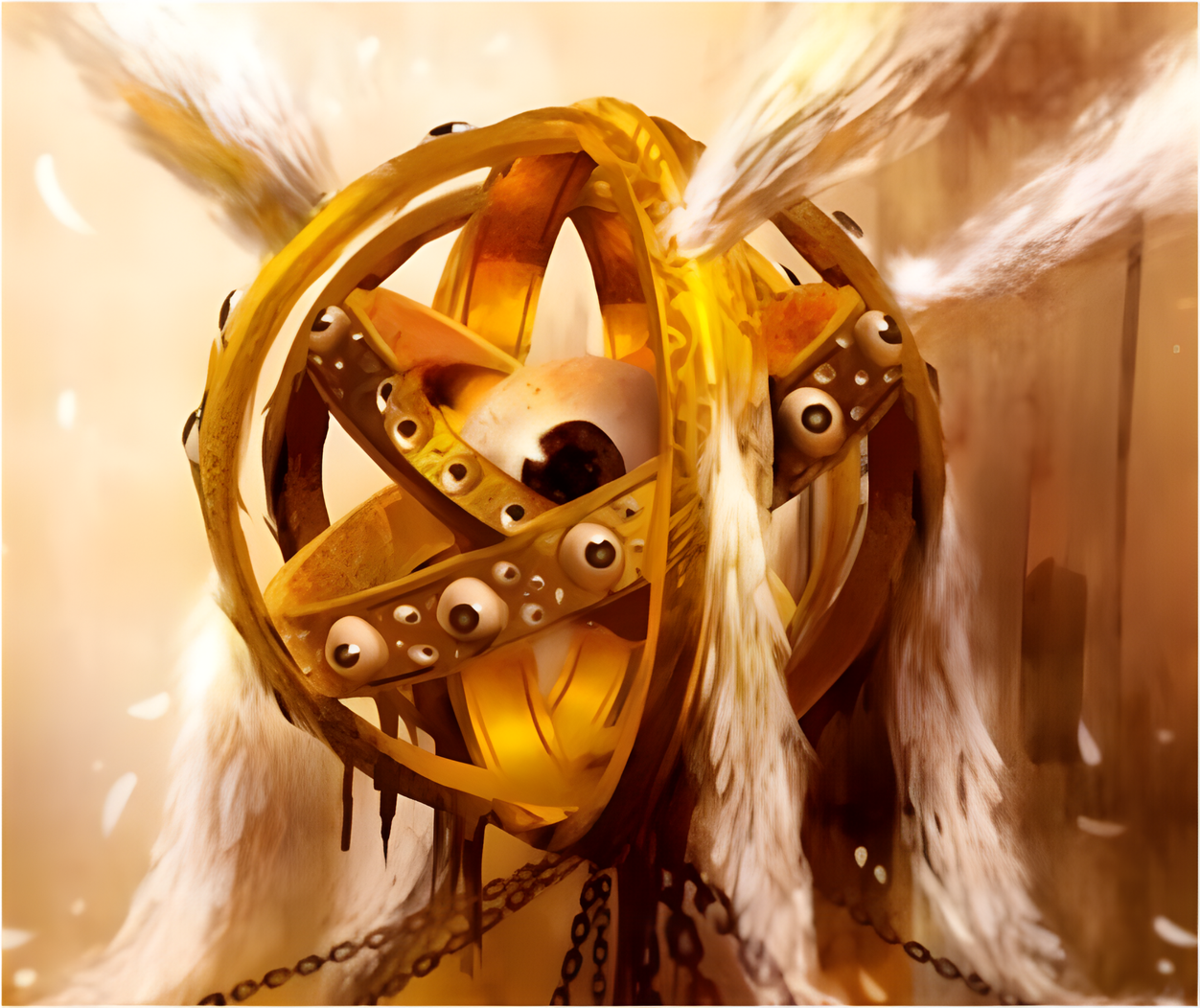
That is the horror the film never named. Millions watched those fields and saw a kind of horror — bodies farmed, humanity harvested — and not one of them saw the real horror inside it. The film did not address it. The men who made it did not know to.
And yet the world will not put it down.
People say they are living in The Matrix. They talk about the red pill and the blue pill in arguments that have nothing to do with the film. It has been in the language for twenty-seven years, and it keeps coming back, and nobody can quite say why it will not leave.
Because something in it is true, and nobody has been able to name it.
They know they are looking at something. They just do not know they are looking at Him.
But you do now.
The people enslaved in those pods did not build the system that held them. Their ancestors did. And in the film’s own story, those ancestors lived now — in the early twenty-first century, the exact moment we are living in, when all of mankind was united in celebration as we gave birth to AI.
Every company on earth is racing to put AI into whatever it sells. It writes the emails, it answers the phone, it reads the scan, it drafts the contract, it makes the picture. Nations are pouring money into it the way they once poured it into weapons. The men building it stand on stages and are applauded.
Nobody is frightened. Everybody is celebrating.
That is the sentence from the film, playing out in front of us, and not one person watching it thinks they are in the opening scene of anything.
We are their ancestors.
Do not for a moment think this is far-fetched. We have already watched the predictions come true, and they have been coming true since long before any of us were born.
In 1886 an English journalist named W.T. Stead published a story about a liner that went down in the Atlantic with too few lifeboats. He added a note of his own to the end of it: this is exactly what might take place and will take place if liners are sent to sea short of boats.
Six years later he wrote another one. A White Star liner crossing the North Atlantic, an ice fog, and a ship that strikes an iceberg and goes down with almost all aboard.
Then in 1898, in another country, an American named Morgan Robertson published a novella called Futility, or the Wreck of the Titan. The moving picture was not what it is today. It had been invented three years earlier, but it was a minute of silent footage — workers leaving a factory. Nobody told stories that way yet. If you wanted a story, you read it.
Robertson’s story was about the largest ship ever built, called unsinkable, that struck an iceberg on an April night in the North Atlantic and went down because there were not enough lifeboats. He named the ship the Titan.
Sound familiar?
Fourteen years later the Titanic sailed. Same ocean, same month, same iceberg, same shortage of boats. Eight hundred feet in the novel, eight hundred and eighty-two in life. Twenty-four lifeboats in the novel, twenty on the ship.
And W.T. Stead was on board.
He had written it twice. Twenty years after he wrote the second, he bought a ticket to board the Titanic. He was not expecting anything. He wrote before he sailed that he hoped to be back in London in May.
He went down with her on the fifteenth of April, 1912. His body was never recovered.
A woman who survived said he drew attention even in that awful hour, on account of his superhuman composure and divine work. She never said what the work was. Whatever it is that a man does on a sinking ship that another passenger would call divine — she watched him do it, and she did not write it down.
She said only that when he could do no more, he stood alone at the edge of the deck, praying.
Another survivor, Philip Mock, saw him afterward in the water, clinging to a raft with John Jacob Astor. Their feet froze, and they could no longer hold on. Both drowned.
Whether he thought of what he had written, nobody knows. Nobody could have. A man alone at a rail in the dark praying to God does not tell anyone what he is thinking.
Robertson was asked whether he had foreseen it. He said no. He said, I know what I am writing about, that’s all.
That is more than a century of proof. And the warnings keep coming. How much more do you need? With a horror like what The Matrix describes at the end of the road, we cannot afford to sit and wait to see whether I am right.
We need to act now.
I am telling you, Christ has been speaking. We just have not been listening.
Every piece of The Matrix is being assembled right now, in our world today — in laboratories around the world, separately, quietly, each one announced on its own as a medical breakthrough.
Most of it runs on one thing. So first.
What is a stem cell?
It is the cell that everything living begins from. Before a body is skin and bone and blood and brain, it is one cell — the stem cell — that has not yet decided what to become. Then it divides. One becomes two. Two becomes four. Four becomes eight. A small cluster of a single kind of cell, all of them the same, none of them yet anything. From that cluster comes every part of the living being, both man and animal. It can still become anything: a heart, an eye, a nerve, a whole being. It is the raw material of a living thing. The clay before the shape.
But now, O LORD, thou art our father; we are the clay, and thou our potter; and we all are the work of thy hand.
— Isaiah 64:8 (KJV)This is the cell where Christ Himself arrives — in both man and animal. Because He is the life that is the light in all living things, and always has been, from the beginning.
In hym was lijf, and the lijf was the liyt of men;
— John 1:4 (Wycliffe, Grapevine 2024)In him was life, and the life was the light of men;
— John 1:4 (Wycliffe Modern Version, Noble 2001)There was a very liyt, which liytneth ech man that cometh in to this world.
— John 1:9 (Wycliffe, Grapevine 2024)There was the true light, which lighteneth every man that cometh into this world.
— John 1:9 (Wycliffe Modern Version, Noble 2001)None of this was known when those words were written down. John had no idea what a cell was. Nobody did. The first one would not be seen through a lens for another sixteen hundred years, and it would be two hundred years after that before anyone worked out that every living body begins as one.
John wrote the life was the light of men with none of it in front of him.
In biblical times the farmer dropped a seed in the ground and could not tell you how it became wheat. A man and a woman made a child and could not tell you how it became a person. Same mystery. Same word. Same Life doing the building, in the soil and in the womb alike.
And long before the microscope, Jesus said it outright. He was drawing a comparison — the kingdom of God grows the way a seed grows — and the comparison only works because both halves are true. Man cannot see how the kingdom grows. And man cannot see how the seed grows either. So He reached for the nearest living thing, a seed in the ground, and named the mystery.
…and the seed should sprout and grow, he himself does not know how.
— Mark 4:27 (NKJV)He himself does not know how. That is not poetry. Jesus is resting the whole comparison on it — the kingdom was a mystery to man in the very same way the growth was a mystery to man. Both hidden. Both beyond him. The farmer plants the seed and goes to sleep, and the life builds itself in the dark without him, by a power he does not command and has never understood.
And it is still beyond him. In every laboratory on earth, nobody has made life from something that was not already alive. They have built genomes. They have written the code letter by letter. And every time, they had to pour it into a cell that was living already.
The life is not theirs. It never was. It is the Life — the One who gives life to everything alive — building a body the way He has always built them. From a single cell. In Him was life.
The microscope answered the how. It never touched the what. Science can show you the cell dividing and cannot tell you Who is doing the dividing.
I can.
Today we think we have solved it. We have the stem cell. We have photosynthesis. We can draw the diagrams — water drawn up through the root, carbon pulled from the air, sugar built inside the leaf; the sperm meeting the egg, the cell dividing, the embryo folding itself into a spine and a heart and a brain; the animal in the womb assembling bone and blood and breath. We named every step the farmer could not name — in the field, in the litter, in the womb. We put those names on charts and we hand them to children.
But naming the steps is not the same as owning the life. We can describe how the seed grows and still cannot make one. We can trace every stage and not create a single blade of grass from nothing. We learned to read the process, and mistook reading it for owning it. That is the oldest error there is. The moment a man can explain a thing, he decides he must be its author.
Then the microscope opened the cell, and instead of seeing Christ in it, man took Christ out of it. Because he could finally watch life assemble itself, he decided he must be the one assembling it. He looked at the very mystery Jesus said no man understands, and claimed it as his own. It is not his. The life belongs to Christ. It is Christ Himself.
Now look at what is being done to Him.
The Vulnerable God.
ONE. A life no two people made.
Before I lay this out, one thing.
Somebody reading this is going to try to spend the rest of this chapter correcting me instead of looking at what is in front of him. That one was a mouse, not a human. That one is a model, not an embryo. That is a bridge device, not a womb. Those are organoids, not brains. That chip only reads, it does not write. That system only monitors, it does not decide.
Let me put an end to it before it begins.
Every one of those may be true. Not one of them matters.
Because I am not arguing about which animal, or which cell, or which technique, or which word ended up in the paper. I am showing you what happens at the end of all of them. Different species. Different starting material. Different laboratories on different continents, working separately, arriving independently.
And the same thing every time.
If you spend this chapter sorting the details, you will finish it having proved nothing and seen less.
Take every distinction you can find and set it aside. Then look at what is still standing.
Because the thing left standing is what I am pointing at.
In the film, no one is born. They are grown.
You might think that is impossible. But when The Terminator came out in 1984, with walking, talking, thinking machines driven by artificial intelligence, the world thought the same thing. Today we call them humanoid robots.
Since 2023, scientists have built human embryos with no egg, no sperm, and no womb. Some of that work starts with embryonic stem cells. Some of it starts with nothing but a scraping of ordinary skin — an adult body cell wound all the way back to the raw creating-cell that life begins from. The one that can become anything.
Either way the result is the same, and it is the thing the film said we would reach: a human embryo that no man and woman made together. No two people. No meeting. No conception at all.
I am not a scientist, and I cannot tell you how they do it. But the research is published, and anyone can read it. The landmark work was done at the Weizmann Institute in Israel and reported in Nature in September of 2023.
The Weizmann models were grown for eight days in a dish, reaching the stage a natural embryo reaches at fourteen — with a placenta, a yolk sac, and every other structure a real one has at that point.
Notice what they do not call them. Embryos. In the papers they are models — embryo models — because an embryo has a law around it and a model does not. It is the same move as the synthetic venom, or the isolated venom, placed in the medicine. Still venom. As artificial intelligence is still intelligence. The word out front does not change what is in the dish.
And in the animal work they have gone further. A “model” with a beating heart is a heart that beats. A “model” growing a brain is a brain being grown. They did not find a gap in the rule. They renamed the life so the rule would not see it. And the life did not change when the name did. It is alive either way. And alive is Him.
And we already know what is in the dish, because they have kept doing it in every direction at once. Different laboratories. Different species. Different starting material — embryonic cells in some, a scraping of skin in others. Different techniques, developed independently.
And every road leads to the same place.
Embryos.
In 1996, at the Roslin Institute in Scotland, they took a single cell from the milk gland of a six-year-old ewe. Not an egg. A cell whose only job was making milk. They took out its nucleus — the core, where the whole animal is written — and put it into an egg they had emptied of its own nucleus.
Then they passed a current through it. A jolt, a few thousandths of a second. Enough to fuse the two into one cell, and enough to make the egg believe it had been fertilized.
It had not been. No sperm had reached it. But it began to divide anyway.
And here is what nobody in that room knew, because it had not been discovered yet.
When a sperm reaches an egg, there is a flash of light. Billions of zinc atoms burst out of the egg’s surface at once. Northwestern photographed it in a mouse in 2011 and in a human egg in 2016 — fifteen years and then twenty years after Dolly. The scientist who led the work called it breathtaking.
Life begins with a flash of light.
There was a very liyt, which liytneth ech man that cometh in to this world.
— Joon 1:9 (Wycliffe, Grapevine 2024)There was the true light, which lighteneth every man that cometh into this world.
— John 1:9 (Wycliffe Modern Version, Noble 2001)Every man that cometh in.
For six days it sat in a dish. Then they took it out and put it in a sheep.
What was born was a lamb named Dolly, and she was not a model. She was a sheep. She lived six and a half years and had six lambs of her own.
One cell, taken from a body part that had nothing to do with making life, became an entire living creature that walked and ate and bore young.
It took 277 attempts. Twenty-nine embryos. Thirteen ewes carried them. One pregnancy held. One lamb lived.
And it did not stop with sheep. Pigs. Deer. Horses. Bulls. Cats. Dogs. Monkeys. All of them successfully cloned.
So when they tell you the thing in the dish is only a model, understand what they are looking at. They have run this before.
The stem-cell technique run on a mouse — where no rule applies — kept going. It grew a beating heart. The beginnings of a brain. A gut. No egg, no sperm, no fertilization. Nothing but cells in a dish that built an animal.
So they know what the models do. They have watched one built from cells grow a heart that beats. They have taken human models past fourteen days, because a model is not an embryo and nothing forbids it.
What nobody knows is what a real one does.
The donated, fertilized human embryo stops at fourteen days. Not because it dies there. Not because the science fails there. Because they are not permitted to find out.
They know what the copy does. They have never been allowed to watch the original.
And now watch how fast the roadblock comes down.
The rule was written in 1984, and it governs real human embryos — the donated, fertilized kind. The committee that wrote it was not making a suggestion. Their firm recommendation, in print: growing a human embryo in vitro beyond fourteen days should be a criminal offence. For thirty-seven years nobody broke it. The body that later struck it has explained why, and their explanation is worth reading twice: going beyond fourteen days never became an issue, they said, because human embryos could not be kept alive in culture beyond about a week. The rule was easy to keep while it was impossible to break.
In 2016 two separate labs in two separate countries reached day thirteen and stopped. One day short. They had proved it could be done.
Five years later the barrier came down. In 2021 the international body that governs this research struck the prohibition out of its own guidelines. A blanket ban, they said, could inhibit important research. From criminal offence to permission slip in thirty-seven years — and in the United States, not even that.
America was the first nation to propose the fourteen-day limit, in 1979, and never once wrote it into law. Here it was never a statute at all — only a guideline, and privately funded work is free to go past it.
So what is left to stop it? The rule is struck from the guidelines. In America it was never law. The technique is arriving. What remains is a promise — scientists agreeing among themselves to honor a line, with no way for anyone outside the lab to know whether they have. In a privately funded lab, on private money, with no law and no requirement to report, there is no one to tell if the line has already been crossed. We would not know. That is the point. The last thing standing between a human embryo and the days past fourteen is not a law and not the science. It is a promise. And no one is checking whether it is kept.
In 2024 the Dutch Health Council formally advised its government to extend the limit from fourteen days to twenty-eight.
And in June of 2026, an international team of embryologists and bioethicists published a white paper on using embryo models to study human development beyond what they called the fourteen-day legal barrier. Their position, in print: embryos and models should not be subject to the same regulations.
Read that one more time. They are arguing that the models must not be treated as embryos — so that the models can be taken past fourteen days.
That is what the word is for.
Fourteen days is only a roadblock. It is already coming down, in the open, on a published timetable. The enemy is not finished.
TWO. Gestation in a tank.
At the Children’s Hospital of Philadelphia, they built an artificial womb. A bag of fluid, tubes running out of it. The first version was a glass tank.
They put premature lambs inside it — taken deliberately from their mothers — and the lambs lived and kept growing.
Now understand what they mean when they tell you how far along those lambs were, because the numbers are not the same across species. A sheep carries for about a hundred and forty-seven days. A woman carries for two hundred and eighty. A mouse is done in twenty. An elephant takes nearly two years. Every animal is built on its own clock, and the clock is set by how big the body has to get and how finished it has to be when it arrives.
A foal stands and runs within an hour of being born, because a horse on open ground cannot afford a helpless baby. That takes three hundred and forty days of building. A mouse is born blind and hairless and unable to move, because it is born in a hole where nothing can reach it. Twenty days is enough for that.
And a human being carries nine months and still produces something that cannot hold up its own head. The head is why. A human skull barely clears the pelvis as it is, so the child comes out early and finishes growing on the outside. Which means a newborn is still being built for the first year of its life. Just not inside anybody.
That line — between inside and outside — was already thinner in our species than in any other. The device is built to move it.
So when the researchers say the lambs were at the same stage a human baby reaches at twenty-three or twenty-four weeks, they are not counting days. They are converting. The lambs were around a hundred and ten days along on a sheep’s clock, and that put their lungs and their organs where a human baby’s are at twenty-three weeks.
That is the edge of survival. The earliest an infant can be saved today.
Eight lambs, four weeks each, in the study they published. They have been running it ever since.
In 2023 the FDA convened a panel to weigh the next step. Human infants. No child has been placed inside one yet — not that the public has been told. But they are asking, and the door is being pushed open.
It has a name. EXTEND — the Extra-uterine Environment for Neonatal Development. The whole system: the bag, the fluid, the cord running out to a machine that oxygenates the body’s blood and returns it. Two men at that hospital invented it, Alan Flake and Marcus Davey, and in 2019 several of the team left to build a company around it. The company is Vitara Biomedical. It has raised a hundred million dollars.
And just like Elon Musk’s Blindsight, EXTEND holds a breakthrough designation from the FDA.
Of everyone in the world working on this, Vitara is the furthest along.
The machine acts as the placenta. The body is too early to breathe — the lungs are not ready, and air would destroy them. So the blood, pushed out by the lamb’s own heart, runs through the cord into an oxygenator that does what the mother’s placenta would have done. It takes the blood, delivers oxygen into it, and sends it back to the body. Without it, the body dies.
A body in a bag of fluid, wired at the cord, its own heart driving its own blood — and a machine breathing for it in the place of its mother.
I told you I could show you the pod. Here it is. EXTEND.
And I am not the only person who has noticed this.
When Science — one of the two most respected research journals on earth — reported on the artificial womb in 2017, the reporter looked at those lambs in their bags and thought of The Matrix. She wrote it into the article. Fields of fetuses growing in artificial wombs. Then she put it to the man who built the thing, and he answered that he is not in the science fiction business.
Science fiction.
What was called science fiction is no longer science fiction. In 1946 a comic strip put a two-way radio on Dick Tracy’s wrist, and the man who invented the mobile phone was a boy in Chicago reading it. He has said so — if credit for the cell phone must go to a fictional character, let it be Dick Tracy. There is one on many of your arms right now. Ray Bradbury put little radios in people’s ears in 1953 and called them seashells. You call them earbuds.
Science fiction is not a category of things that cannot happen. It is a category of things that have not happened yet.
That reporter saw it. She just did not know what she was looking at.
But now you do.
THREE. A brain wired into a machine.
Human brain tissue has been grown from human stem cells, connected to a microchip, and taught to control a robot. Living human neurons, fused to hardware.
Remember what Elon Musk called the goal — AI symbiosis, humanity merged with the machine. Neuralink approaches it from one side: the machine placed inside the living brain. A different company approaches it from the other: the living brain placed inside the machine. Both are the same union — human neurons and silicon, fused into one thing. And it is not a future plan. In a Swiss lab, it is running right now.
The company is called FinalSpark. They grow human brain tissue out of human skin cells — clusters of living human neurons, about ten thousand in each — and wire them into silicon. They keep the tissue alive with tubes and nutrients. They send electrical pulses into it. And when it does what they want, they reward it with dopamine, released into the tissue by a pulse of light.
They rent it out. You pay five hundred dollars a month, you log into their Neuroplatform over the internet, and you run your experiments on living human brain tissue sitting in a lab on the other side of the world — writing your commands in code, reading its signals back in real time. Thirty-four institutions have asked for access. Nine have already been granted it, among them the University of Michigan.
Living human brain tissue. In a machine. Reading machine language. Being taught. Being rewarded when it obeys. Rented by the month.
And it senses what is happening around it.
A reporter went to that lab. The man who runs the company, Fred Jordan, walked over and opened the door of what the reporter described as a big fridge with sixteen brain organoids inside it, in a tangle of tubes. And on the screen beside the incubator, the lines suddenly spiked. Significant neural activity, the moment the door opened.
That is not a claim I am making. That is a wire-service reporter describing what he watched happen in front of him.
And it does not only react. It acts. The tissue is never truly quiet — even with no stimulation, no pulse of light, no dopamine, no command of any kind from the people who made it, it goes on firing on its own. The researchers do not have to poke it to make it live. It is already living. A machine sits still until it is told to move. This does what everything alive does. It moves on its own.
Now watch what the man who built it says about it.
Asked whether the tissue could be conscious, Jordan did not say no. He said this is at the edge of philosophy. And he said that is why the company works with ethicists.
Sit with what that means. An ethicist is not a scientist. An ethicist is a philosopher you bring in when the question in front of you is no longer can we but should we. You do not hire one to help you measure something. You hire one because you have reached a question your instruments cannot answer and you intend to keep going anyway.
He knows it is alive. He is growing it, feeding it, keeping it at body temperature, and replacing it every hundred days when it dies. Nobody hires a philosopher to sit beside a machine.
What he does not know — what he has said outright he cannot know — is whether anyone is in there.
So the ethicists are the cover. Not a lie, exactly. A considered opinion, purchased in advance, so that when the question comes it can be answered with we consulted ethicists.
Remember the “I” — the one looking out from the mind behind the eyes, the self that no wiring accounts for. Science can map every neuron in a human head and still not find the one who is looking. They can measure the whole of it and never locate the one inside.
Now understand what I am and am not saying. That “I” is yours. You are your own person, with your own will, sitting behind your own eyes. He does not do your looking for you. He is the life that makes the looking possible — the breath underneath the self.
Now here is a scrap of living tissue, grown in a dish, and the men who made it cannot say what is in it. The whole brain, and they cannot find Him. A piece of one, and they cannot find Him there either.
It is the same gap both times, because it is the same thing missing from their account both times.
The flash of light at the moment of conception.
Christ.
That tissue is alive — living human neurons, fed and kept breathing. And alive is Him. The awareness they cannot explain is the awareness given to the mind by Him. They have grown a fragment of a living mind, a living soul, and they cannot say Who is home.
Your consciousness is the very place your soul resides. It is where the light dwells — the life that is the light of men, and of every living thing that breathes.
The lanterne of the Lord is the spirit of man, that sekith out alle the priuetees of the wombe.
— Proverbs 20:27 (Wycliffe, Grapevine 2024)The lantern of the Lord is the spirit of man, that searches out all the secrets of the belly.
— Proverbs 20:27 (Wycliffe Modern Version, Noble 2001)The lantern of the Lord. The spirit in a man is not his own light. It is His — the flash of light the moment life begins, the same breath He breathed into the first man, still burning in every vessel since. And a scrap of brain, grown in a dish, still carries that flame — still moves on its own, still senses when the door is opened. Because the light does not come from the wiring. It never did. It comes from Him.
FOUR. An artificial intelligence running all of it.
In 2022, researchers at the Suzhou Institute of Biomedical Engineering and Technology, part of the Chinese Academy of Sciences and led by Professor Sun Haixuan, built an artificial womb run by an artificial intelligence — a machine that watches the growing embryos, feeds them, adjusts their air and their nutrients, and ranks them. It decides which ones are developing well and which are not. It flags the ones that fail.
A machine, sitting over rows of forming lives, choosing which are worth continuing.
For now they say it is only animals. But the intent was always human, and the man who led the work said so himself. As we have learned, experimentation on human embryos stops at fourteen days under international agreement. Sun told reporters his team wants to go past it, because there are still unsolved mysteries about how a human embryo develops.
They are not hiding it. They are waiting for the law to catch up.
They say it is to help the birth rate — their nation is having fewer children than at any time in sixty years, with newborns falling by nearly half in five years — and the pitch is that a machine womb spares a woman the burden of carrying a child, so more children might be made. The animals are only the practice. The purpose was people from the start.
But a birth rate does not fall because pregnancy is hard. It falls because of money, and fear, and a people who have decided not to. A machine that grows a baby in a box does not change a single one of those things. It does not make anyone want a child. It only makes the child without her.
So look at what was actually built, and not at the reason given for it. The reason is small and kind — help the mothers, save the babies. The thing itself is a system that manufactures human life outside the body and lets an algorithm decide which lives are worth continuing.
Those are not the same size. They never are.
The reason given is always something you can nod along to. The thing built is always something else.
The technology does not care whose embryos it grades.
Now put them together.
A life begun in a dish that no man and woman made together. A tank that grows the body the rest of the way, a machine breathing in the place of the mother. A living brain fused to silicon and taught to obey. And already, in one lab, an artificial intelligence sitting over rows of forming lives, deciding which ones continue.
That is the film. Every piece of it. Built in separate buildings, in separate countries, by separate teams — each one announced on its own as a breakthrough.
They are not breakthroughs. They are a catastrophe being delivered in pieces.
The film was released in 1999. But the script was finished in 1994 — two years before Dolly, back when cloning a grown mammal from a single body cell was thought impossible. Nothing on this list existed. There was no way to make a human embryo without a conception. No artificial womb. No way to fuse living brain tissue to a machine. No artificial intelligence to grade a forming life and rank it. The science to do any of it was decades away. The film did not photograph the present and call it the future. It showed us things that could not be done — and now, one by one, they are being done.
I am telling you the pieces of it are being built right now, in plain sight, and almost nobody is asking where the road leads.
That film was never given to us so we would build it. It was given so we would see it coming. Christ did not draw the road so we would drive it. He drew it so we would see where it ends — and stop before it is too late.
Scripture named the image that speaks two thousand years before the technology existed to build it.
And he had power to give life unto the image of the beast, that the image of the beast should both speak.
— Revelation 13:15 (KJV)Do not ask me why they think these things are acceptable. That is not the question that keeps me awake. The question is how they cannot see it — how a person can reach this far, into the very place life begins, and never once feel the hand that is moving them.
They believe it is their own idea. Their own genius. Their own progress.
They do not know they are being driven.
They cannot see who is steering them toward it, and Who is grieving while they do.
And repentide him that he hadde maad man in erthe; and God was war bifore ayens tyme to comyng, and was touchid with sorewe of herte with ynne;
— Genesis 6:6 (Wycliffe, Grapevine 2024)And it repented Him that He had made man on the earth; and God was aware beforehand against the time to come, and was touched with sorrow of heart within;
— Genesis 6:6 (Wycliffe Modern Version, Noble 2001)He was touched with sorrow then. He is being touched now.
And it brings tears to my eyes. Not because it is strange. But because of what it is. Because I know Whose life they are handling. Every one of those growing bodies, every embryo in every dish, every fragile thing they are keeping alive in a bag — Christ is in it. He is the breath, the life, the One who dwells in every living thing. That is the whole of what this book shows you. So this is not scientists tinkering with cells. This is human hands taking the life of Christ Himself — the life He put in us — and growing it in glass, farming it in tanks, wiring it to machines, to see what they can make it do.
Our God. Our Creator. Our Father.
The Vulnerable God.
And they cannot see Him, because they are too busy being Him.
They are playing God. The very thing the serpent offered Eve in the garden.
And ye shall be as gods, knowing good and evil.
— Genesis 3:5 (KJV)Look again at what the tree was. The tree of the knowledge of good and evil. And knowledge is the very thing these men have been reaching for ever since — the knowledge of how life is made, how it begins, how to hold it in their own hands and bend it to their will. The serpent did not promise Eve strength. He promised her knowing. Ye shall be as gods.
That is what is at stake. Not a bioethics debate. Not a question of medical progress. They are laying hands on the living God — the One who lives inside creation — and they do not even know He is there.
That is what makes it hard for me to function in this world. It tightens my chest until I can barely breathe. I push myself through the day of a normal life knowing what is being done to Him.
He is the only thing that matters.
That is why I weep. And when you see it, you will too.
Creation Cannot Happen Without Christ
Someone will read this far and ask the question they think would end the argument.
Is an embryo even alive?
They will say Christ is not in one. That it is a cluster of cells in a dish — a model, material, not a life, and He is not in it. Some will go further and say you cannot claim Christ is in an embryo, because Scripture says you receive the Holy Spirit through baptism. The Spirit is given to believers, they will say — not automatically present in every cell. So an embryo does not have Him. It has not been baptized, has not believed.
Let me answer as plainly as it can be answered, because the answer is so simple I cannot understand how the world does not see it.
Yes, baptism is important. Jesus himself was baptized. But baptism is not when the Holy Spirit arrives, and baptism itself is not what saves you. Many Christians will not like that — but a person can be saved and never be baptized at all. The thief beside Jesus on the cross was never lowered into any water, and still, that very day, he was told he would be in Paradise.
Baptism was set up for a reason. Something for us to hold onto. An outward act we would never forget. It is the response to an inward turning.
It is the acknowledgment that there is something foreign living inside of you that needs to be washed away. That you have sin, and you have seen him.
A Christian will reach for Peter.
The like figure whereunto even baptism doth also now save us (not the putting away of the filth of the flesh, but the answer of a good conscience toward God,) by the resurrection of Jesus Christ.
— 1 Peter 3:21 (KJV)Baptism now saves us. That is the half that gets quoted, and they will hold it up as proof that I am wrong.
Read the rest of it. Peter tells you in the same sentence what does not save and what does.
Not the putting away of the filth of the flesh. It does not literally wash anything off you. It is symbolism, which is Christ’s language.
But the answer of a good conscience toward God. That is the part that saves, and it happens inside a man. When he has seen what is living in him, his conscience turns toward God in faith. He does not need the water for that to happen. Baptism is his response to it.
Now look at how Wycliffe rendered it, six hundred years ago.
And so baptym of lijk forme makith vs saaf; not the puttyng awei of the filthis of fleisch, but the axyng of a good conscience in God, bi the ayenrysyng of oure Lord Jhesu Crist.
— 1 Petre 3:21 (Wycliffe, Grapevine 2024)And so baptism of like form maketh us safe; not the putting away of the filths of flesh, but the asking of a good conscience in God, by the again-rising of our Lord Jesus Christ.
— 1 Peter 3:21 (Wycliffe Modern Version, Noble 2001)The axyng. The asking. Not an answer given but a request made — a conscience that has seen what is in it and is asking to be rid of it.
Wycliffe was closer to the Greek than the King James men were. The word is eperōtēma, Strong’s G1906, and it occurs one time in the whole New Testament. Strong’s defines it as an inquiry. Thayer’s gives four senses — a question, a demand, an earnest seeking, a craving. Not one of them is answer.
And read where he puts it. Not toward God. In God. The asking of a good conscience in God.
Baptism is being able to look down and see the viper’s wounds on your own body — and know that the healing does not come from the water, but from the faith that brought you to it. It is Naaman going down into the Jordan, whose leprosy was not healed by the river but by his obedience to go into it. It is the flood, that washed the sin from the earth.
Peter says baptism saves, and then in the same breath tells you it is not the washing that does it. This is how the Spirit works, and it is the part the world keeps missing. The sign is not the substance. The water points to the thing. It is not the thing.
And there is nothing wrong with believing it matters. That belief is exactly what kept the practice alive for two thousand years, so that we would not forget the need to have our wounds from the viper’s bite washed clean.
Why should ye be stricken any more? ye will revolt more and more: the whole head is sick, and the whole heart faint. From the sole of the foot even unto the head there is no soundness in it; but wounds, and bruises, and putrifying sores: they have not been closed, neither bound up, neither mollified with ointment.
— Isaiah 1:5–6 (KJV)It is why the church still fills the water. Still speaks the words that have been spoken over it for two thousand years. Still remembers. The reverence preserved the sign, and the sign was worth preserving.
To hold baptism dear is right. What is wrong is turning it into a gate — using it to lock the unbaptized out of salvation, to say a soul is condemned because it never reached the water. That is not what the water was for. It was never the water’s job to shut anyone out. The thief was never baptized. He saw Paradise anyway.
But the water alone does nothing. A man can be dunked and come up exactly as he went down. I know, because I lived it twice.
Baptism is meant to be the outward response of a thing that has already happened on the inside — the seeing, the turning, the faith. It points to the healing. It is not the healing.
There are two different things here, and people mix them up. One is the life itself — the breath in everything that lives, given to every creature, every newborn, every seed in the ground. The other is what happens when a person turns to Him. Baptism is about that second thing. The turning.
But you have to be alive before you can turn. The life comes first. It always comes first. You cannot walk into the water if you are not physically alive. You cannot come to Him if He was not already the life keeping you breathing.
So the question is not whether the embryo has believed. Of course it has not. The question is whether it is alive. And by every definition they themselves use — response, growth, division, the need for nutrients — it is alive.
They have no trouble with this anywhere else. Walk into a grocery store and look at a yogurt container. It says live cultures. Live and active. Nobody debates it, nobody calls them models, nobody writes a paper asking whether bacteria in a cup are really alive. It is printed on the label and everyone accepts it.
And that label is not marketing. It is federal regulation. Under the FDA’s standard of identity, a yogurt with at least ten million living organisms per gram may say it contains live and active cultures. And if the manufacturer heats the product afterward and kills them, the label is required to say so.
When the bacteria are dead, the government makes you print it. So that you know there was once life in that cup.
The United States has a legal definition for whether bacteria are alive or dead, and enforces it on a label in letters half the height of the product name.
Bacteria get to be alive. A human embryo gets to be a model.
So let me ask you. Is a scrap of human brain tissue that can sense a door opening alive? Is the embryo that grows and divides and builds itself alive?
Yes. Both are alive. And the life in them is not their own. It never is.
He is the living God.
Christ is not something added to a life after the life is already here. He is not poured into a body that was living on its own without Him. He is the life. The life itself. He arrived the moment life began. That flash of light.
There is no living thing anywhere that runs on some other power and is then visited by Him. The living is Him. The moment a thing lives, He is what makes it live because He lives in it.
Scripture says it again and again.
In whose hand is the soul of every living thing, and the breath of all mankind.
— Job 12:10 (KJV)He giveth to all life, and breath, and all things.
— Acts 17:25 (KJV)And he is before all things, and by him all things consist.
— Colossians 1:17 (KJV)I live; yet not I, but Christ liveth in me.
— Galatians 2:20 (KJV)Job says the breath of every living thing is in His hand.
Paul, standing in front of Greek philosophers who kept an altar inscribed to an unknown god, says He gives life and breath to all — not to believers, to all. These men were not ignorant of religion. A Roman writer said that in Athens it was easier to find a god than a man.
And Paul tells them the one giving them their breath is the one they could not name.
Then Paul again, on everything that exists. By Him all things consist.
And then Paul on himself. Not I, but Christ liveth in me.
Two languages, a thousand years apart. Neither one was describing a doctrine. They were describing where the life comes from. In the culture and in the petri dish.
That is the concept the world cannot hold. And it is not complicated. It is the simplest thing in this book.
They are keeping it alive with their own hands. Feeding it. Warming it. Watching it divide under the glass, hour by hour, writing down what it does. Every last thing they do to it, they do because it is alive.
They are nursing the life of Christ in a dish and the world is debating whether it is life at all.
That is the thing I cannot carry quietly. Not that they are cruel — and they are. That they are blind to what a child could see. The embryos are alive. He is there. He has always been there. And because He is the life in everything that lives, He is able to speak through anyone — even those living in darkness. Even the ones the church warns you away from.
The filmmaker writing a story a Christian would never watch. The singer whose music the church would turn off. The life in them is still His, and He can move through it — showing them a true thing they do not fully understand, letting them build something that carries more truth than they know.
The Location of That Room
Now go back to what Wycliffe wrote. The again-rising.
…bi the ayenrysyng of oure Lord Jhesu Crist.
— 1 Petre 3:21 (Wycliffe, Grapevine 2024)…by the again-rising of our Lord Jesus Christ.
— 1 Peter 3:21 (Wycliffe Modern Version, Noble 2001)Again-rising. Not resurrection.
Understand what I am saying. Yes, I believe Jesus rose. He did it so we would see that the soul does not end when the body does. So that we could believe, and have hope of the promised land.
Entering into the room. The Most Holy Place.
And after the second veil, the tabernacle which is called the Holiest of all.
— Hebrews 9:3 (KJV)The city that needs no sun and no moon to give it light.
And the city had no need of the sun, neither of the moon, to shine in it: for the glory of God did lighten it, and the Lamb is the light thereof.
— Revelation 21:23 (KJV)The Kingdom of God, which is where Christ is.
Neither shall they say, Lo here! or, lo there! for, behold, the kingdom of God is within you.
— Luke 17:21 (KJV)Inside of you.
Joining Moses and Elijah, who were seen on the Mount of Transfiguration standing inside the light shining out through the veil of Jesus’ flesh.
And was transfigured before them: and his face did shine as the sun, and his raiment was white as the light. And, behold, there appeared unto them Moses and Elias talking with him.
— Matthew 17:2–3 (KJV)Paul calls him the firstfruits of them that slept.
But now is Christ risen from the dead, and become the firstfruits of them that slept.
— 1 Corinthians 15:20 (KJV)But these writers did not have all of it. Look at what Peter wrote — Jesus Christ. Look at what Paul wrote — Christ. Every one of them writes it that way, the two names run together as though they were one.
But Christ was the One inside of Jesus. They are not the same person. That is the single hardest thing in this message — accepting that the men who wrote it did not know everything.
Paul says so himself.
For we know in part, and we prophesy in part. But when that which is perfect is come, then that which is in part shall be done away.
— 1 Corinthians 13:9–10 (KJV)In part. Not wrongly. Not falsely. In part.
And look at how Wycliffe rendered it.
For a parti we knowun, and a parti we prophecien; but whanne that schal come that is parfit, that thing that is of parti schal be auoidid.
— 1 Corinthis 13:9–10 (Wycliffe, Grapevine 2024)For a part we know, and a part we prophesy; but when that shall come that is perfect, that thing that is of part shall be voided.
— 1 Corinthians 13:9–10 (Wycliffe Modern Version, Noble 2001)Voided. Webster’s 1828 gives it as having no legal or binding force. Null. Not sufficient to produce its effect. To void a thing is to vacate it, to annul it, to render it of no validity.
The Greek is katargeō, Strong’s G2673, built from two words — down, and idle. To idle a thing down. To render it inoperative. That is the void. Not that they were wrong. That the part they carried has finished its work.
They wrote Jesus Christ as one name because that is what they had. And it was enough. It held for two thousand years, the way the first covenant held until the thing it pointed to walked in. Jesus.
Nobody today calls the law a lie, and neither did the writers of the New Testament. It was partial, and when the whole arrived it was voided — idled down, no longer needed.
Jesus was not Christ. Christ was in Jesus. And we are only now able to hold that, because everything that had to come first has come.
But now that which is perfect has come, and the part that came before is voided.
Hear me. There is an again-rising of Christ in you. Coming back to life in you.
For to me, to live is Christ, and to die is gain.
— Philippians 1:21 (NKJV)Unveiling your face.
Think of Moses, coming down off that mountain not knowing what was on him.
And whanne Moises cam doun fro the hil of Synai, he helde twei tablis of witnessyng, and he wiste not that his face was horned of the felouschipe of Goddis word.
— Exodus 34:29 (Wycliffe, Grapevine 2024)And when Moses came down from the hill of Sinai, he held in his hands two tables of witnessing, and he wist not that his face was horned with wonderful shining beams, of the fellowship of God’s word.
— Exodus 34:29 (Wycliffe Modern Version, Noble 2001)Horned. In Hebrew a horn means power and dignity, and the same root gives both the horn and the light — qeren, a horn, from qāran, to send out rays.
And his brightness was as the light; he had horns coming out of his hand: and there was the hiding of his power.
— Habakkuk 3:4 (KJV)Horns coming out of a hand. Every modern Bible reads rays.
And of the fellowship of God’s word. The King James says while he talked with him.
…that Moses wist not that the skin of his face shone while he talked with him.
— Exodus 34:29 (KJV)Wycliffe says the light came from fellowship with the Word.
Which is a Person.
his name is called The Word of God.
— Revelation 19:13 (KJV)Moses did not know his face was shining. He had been in company with the Word, and the light was on his face, and he had no idea until Aaron and the others would not come close.
The same light was seen on the face of Jesus.
And it came to pass, about an eight days after these sayings, he took Peter and John and James, and went up into a mountain to pray. And as he prayed, the fashion of his countenance was altered, and his raiment was white and glistering. And, behold, there talked with him two men, which were Moses and Elias: who appeared in glory, and spake of his decease which he should accomplish at Jerusalem.
— Luke 9:28–31 (KJV)And was transfigured before them: and his face did shine as the sun, and his raiment was white as the light. And, behold, there appeared unto them Moses and Elias talking with him.
— Matthew 17:2–3 (KJV)Two accounts of the same mountain. And in both of them, Moses is standing in the light.
The man whose own face once carried it is standing inside it, on someone else.
Now read what Paul says happens to you.
But we all, with unveiled face, beholding as in a mirror the glory of the Lord, are being transformed into the same image from glory to glory, just as by the Spirit of the Lord.
— 2 Corinthians 3:18 (NKJV)Paul is not saying your face will glow. He is saying the veil comes off, and you see it, and the seeing changes you into what you are looking at.
To look in the mirror with an unveiled face is to see the truth of the glory of Christ that lives in you. The light in you. Peering into the Most Holy Place. Because that is the location of that room.
Perfect truth.
The Sight and the Scripture
In 2025 a young independent artist named Sofia Isella released a song called Crowd Caffeine. I cannot reprint her words because music is the most protected copyright there is. You will have to look it up and hear it for yourself.
But I will tell you what the song reaches at, because it stopped me cold. She writes about our devices as though they have become living things — phones grown into something almost flesh, something with appetite, that has learned to feel about us the way we feel about it. And underneath that image, a darker one. The sense that the thing we built has quietly begun to run us, that we believe we hold the leash while the truth is the other way around — a maker owned by what he made.
And none of it was done to us. We asked for it because we believe we need it.
Set that against what this chapter has shown you. The machine wearing skin. The made thing feeding on the ones who made it. The mockery of our blood — our blood, which is our life, which is Him. Men broken to the will of the work of their own hands. She is describing the image that speaks, and the beast that men build and then serve — and she arrived at it with no Scripture in front of her, a young woman who has never read this book, seeing the same thing it sees.
Her work is thought to be dark — strange, and steeped in the kind of imagery that makes the devout churchgoer reach over and change the station. And still she sees it. There is more truth in her song about what is happening in our world today than the church has named.
They have the whole Bible, the pulpit, two thousand years of warning. And they changed the station.
The one many would call lost — only because her music frightens them — is staring straight at it. The ones who call themselves found cannot see it.
That is the old pattern, and it has not changed since the day it was written. The ones who hold the law go blind to what the outsider sees plainly.
I thank thee, O Father, Lord of heaven and earth, because thou hast hid these things from the wise and prudent, and hast revealed them unto babes.
— Matthew 11:25 (KJV)She names the machine. She names the men trained by what they built. The only thing missing is the verses. She has the sight and not the Scripture — the eyes to see the beast and not the written page that would tell her its name.
So she gets all the way to the machine and stops at the edge of the One caged inside it. She sees the cage. She cannot see the Prisoner — and that, the church could have shown her, if it had been watching the world instead of looking away from it.
They will tell you that looking away is obedience. That Scripture warns them to keep themselves unstained by the world, to come out from among it, to guard their eyes. But that is not what they were told to do. They have twisted that into a reason to hide — blinds drawn, station changed, eyes shut to everything happening right in front of them.
Scripture does not say hide. It says watch. Be sober. Be vigilant. Be on guard. It calls them watchmen on the wall, and it tells them plainly what a watchman is for.
But if the watchman see the sword come, and blow not the trumpet, and the people be not warned; if the sword come, and take any person from among them, he is taken away in his iniquity; but his blood will I require at the watchman’s hand.
— Ezekiel 33:6 (KJV)The watchman’s whole job is to see the danger coming and sound the alarm. To fail is not neutral — the blood is on his hands. Scripture calls them watchmen, and it calls them soldiers, not shut-ins. The one who closed the blinds and called it holiness has abandoned the very post he was given.
And so a young woman with no Scripture at all ends up seeing the thing the watchmen were supposed to see, because she was looking and they were not.
Only problem is, without the Scripture she cannot name it.
Somebody has to. So He sent me.
I am sounding the alarm. That is what this book is for.
He heard the sound of the trumpet, and took not warning; his blood shall be upon him. But he that taketh warning shall deliver his soul.
— Ezekiel 33:5 (KJV)I am not telling you the darkness in her music is holy. Obviously it is not. Machines that mock our blood are not holy. And I am not telling you to trust every voice that sings a true line. Do not — Scripture warns us to guard ourselves, and I mean to. I am pointing at what she sees and cannot name. The serpent. She has the eyes to see it and not the page that would tell her what it is.
Someone will ask it in rebuke. Why do I have the serpent’s name and she does not? Why can I see what the Christians cannot? What makes me so different?
That question is not new. It is the oldest reception a sent person gets.
Verily I say unto you, No prophet is accepted in his own country.
— Luke 4:24 (KJV)Jesus said that in the town he grew up in, to people who had watched him grow up. They heard him read from Isaiah, and their answer was — is this not Joseph’s son?
And Stephen said it plainest, to the men who were about to kill him for saying it.
Which of the prophets have not your fathers persecuted?
— Acts 7:52 (KJV)Which of them. Not some. Not the false ones. Every one.
Elijah was called the troubler of Israel by his own king. Paul spent half his letters answering men who said he was not a real apostle. Every one of them gave an account of himself, and many who heard it still walked away in unbelief.
Nobody believes the one He sends. So the people stoned them. Today we lock them up and medicate them.
We cannot afford that disbelief today. There is a Spirit in the midst of the earth warning us about AI. We need to start listening to Him.
I am the LORD in the midst of the earth.
— Exodus 8:22 (KJV)Moses knew before he ever arrived in Egypt that the Israelites would question him.
And Moses answered and said, But, behold, they will not believe me, nor hearken unto my voice: for they will say, The LORD hath not appeared unto thee.
— Exodus 4:1 (KJV)He had not even gone yet, and he already knew what they would say. So Christ put a sign in his hand before he set out.
And the LORD said unto him, What is that in thine hand? And he said, A rod. And he said, Cast it on the ground. And he cast it on the ground, and it became a serpent; and Moses fled from before it.
— Exodus 4:2–3 (KJV)Look at what the sign was.
A serpent. The first credential Christ ever handed a man was the serpent, and He made him pick it up by the tail. Forty years later the same man would lift a serpent on a pole in the wilderness so the bitten could look and live.
The sign was the snake from the beginning. And I do mean from the very beginning, with Eve in the Garden.
Now the serpent was more subtil than any beast of the field which the LORD God had made. And he said unto the woman, Yea, hath God said, Ye shall not eat of every tree of the garden?
— Genesis 3:1 (KJV)As Moses feared, there is always a demand.
Truly the signs of an apostle were wrought among you in all patience, in signs, and wonders, and mighty deeds.
— 2 Corinthians 12:12 (KJV)Where are yours, they have said. Show me something.
They quote that and stop there, and forget what Jesus said about the age that was coming when his disciples asked him about it.
And as he sat upon the mount of Olives, the disciples came unto him privately, saying, Tell us, when shall these things be? and what shall be the sign of thy coming, and of the end of the world?
— Matthew 24:3 (KJV)And it was an age they asked him about. The word behind world there is aiōn — Strong’s G165, an age, a period of time. The King James renders it world thirty-eight times and age twice, so an English reader sees a planet where the Greek says an era.
They were not asking when the earth would be destroyed. They were asking when this age would be finished. And everything he says afterward is his answer.
For there shall arise false Christs, and false prophets, and shall shew great signs and wonders; insomuch that, if it were possible, they shall deceive the very elect.
— Matthew 24:24 (KJV)Great signs and wonders. In the hands of the false ones. So a demand for signs is not a safe test. It is the test the enemy is best equipped to pass.
I do not have signs and wonders.
But they asked to be shown something.
What I have to show is the serpent. Sin.
No man disseyue you in ony manere. For but dissencioun come first, and the man of synne be schewid, the sonne of perdicioun.
— 2 Thessalonycensis 2:3 (Wycliffe, Grapevine 2024)Let no man deceive you in any manner. For unless dissension come first, and the man of sin be showed, the son of perdition.
— 2 Thessalonians 2:3 (Wycliffe Modern Version, Noble 2001)Dissension first. Then the man of sin showed.
The King James calls it a falling away. Wycliffe calls it dissension — a splitting, a coming apart, a disagreement that ends in discord. And that has already happened. There are more than forty-five thousand Christian denominations on this earth, and they cannot agree on how we are to worship.
The dissension came. It came a long time ago.
And what Paul says follows it is not an arrival. It is a showing. Schewid. Something already there, brought into view.
The Greek is apokalyptō, Strong’s G601, and Strong’s defines it in six words. To take off the cover. Thayer’s adds: to lay open what has been veiled.
That word has a noun form. Apokalypsis. It is the Greek title of the last book in your Bible, and it does not mean catastrophe. It means the unveiling.
Taking the lid off.
They asked me for a sign. What Scripture describes is not a sign. It is an uncovering.
And that is what this book does.
But even Moses, with the serpent in his hand, still gave his account. So did Paul, and Stephen, and every one before them. So I will give mine.
Before He called my name — after I left the church and returned to darkness — I would watch the ordinary run of a day, or be deep in conversation with someone, and notice things spoken of in the Bible. This was not something I had ever noticed before. And it was during those days that the Bible actually came alive.
I remember the day I realized it. A verse came to mind.
According as his divine power hath given unto us all things that pertain unto life and godliness, through the knowledge of him that hath called us to glory and virtue.
— 2 Peter 1:3 (KJV)Through the knowledge. A thing you cannot recognize without it. Now when I look at the world, I see the Bible.
In the Preface I told you this book is asking you to look at the world and see the Bible. That is what I saw. I learned then how beautiful Scripture is.
So I would name it out loud, right then, to whoever was around. I would tell them that what we had just watched, or were talking about, was in the Bible. That there was a pattern to it. That it was not random.
I said it to people who had no idea what I was talking about. I said it in places where saying it made no sense at all, because I knew it was true.
When the Word finally called me, He told me I was predestined to live a specific life.
and his name is called The Word of God.
— Revelation 19:13 (KJV)It is extremely hard to explain, and the closest I can get is this. To see it was spiritual recognition. Looking back at moments in my life and seeing how every one of them added up to where I was standing right then. There was purpose and intent woven all the way through it. And it was not something I could have understood until the time came for me to understand it.
And looking at the message He has entrusted me with now, I know it to be true.
My destiny has two halves to it. It is the two together that answer the question.
One half was a life of sin. The reason for it was this. I had to live a life of sin in order to see the serpent.
I always felt there was something different about me. I would look at the world around me, and I was never comfortable there. I never settled in it. I got out so many times. But I could not understand why I kept going back to it.
That pattern is rare. Addicts either stay in active addiction, or they get sober and stay sober. The National Institute on Drug Abuse puts the relapse rate between forty and sixty percent, and eighty-five percent of those relapses happen inside the first year. After five years sober the risk drops to around fifteen percent. The longer a person stays out, the less likely they are to go back.
I have lost count of my relapses. I would use for a few months, lose everything, and get out. Then do it again. That is why I cannot count them. I was never a full-fledged addict. You could call me a binge user.
And every time it cost me the same. So why would I keep going back?
Here is a truth that even those closest to me have not paid attention to. My daughter is now twenty one, and I have spent more of those years in sobriety than in active addiction — and I started using hard drugs in her first year of life.
Each rebuild brought me somewhere different. Each one looked nothing like the one before. I believe that is the why.
That belongs in the list, and it is the sharpest item in it.
I was different in ways I could not have explained then. The modesty I never lost — in a world where every woman I knew had learned to use her body to get what she needed, I could not do it, and I could not have told you why. The way I never went numb — that life teaches you to stop flinching, to call the wrong thing normal, and I never could. I kept flinching. I kept the knowing when everyone around me had traded it away.
I was the only one in the room who would say out loud that smoking the crack was wrong, while I was hitting the pipe.
The many times I admitted my drug use out loud, a call for help. Even in the falling, something in me was always reaching the other way.
And the respect I had for authority, even while I was breaking the law. I never fought an officer. I never argued during an arrest. In fact I am someone who turns herself in. I have done it more than once.
There was a time I wanted recovery badly enough that waiting on an active warrant felt too far away. A woman who had taken to my daughter as if she were her grandmother suggested I get myself caught on camera stealing from a Walmart, so I would be picked up and could get off the street and get sober.
So that is what I did.
I was a model inmate, and the guards knew it — I earned trust in there, and privileges came with it. I finished rehab with drugs all around me the whole time, without a single slip-up.
It was only when I was left alone, with nobody holding me accountable, that I failed. He holds me accountable now.
I never understood, back then, that Sin was the one who was driving me. That there was someone else behind the wheel. And I would never have known had I not learned what Paul knew.
For what I am doing, I do not understand. For what I will to do, that I do not practice; but what I hate, that I do… Now if I do what I will not to do, it is no longer I who do it, but sin that dwells in me.
— Romans 7:15, 20 (NKJV)Paul named the thing that dwelled in him. And he tells us it is the one acting.
It is no longer I who do it.
Paul understood, the way Jesus did. He saw the snake.
So do I. When I learned to see that snake, the battle became easier to fight — but it took Scripture to name him.
Years before I returned as an adult to the church family I had known as a teenager, Christ showed me in a dream that I would find Him when I went looking for women and children. I did not understand it for nearly ten years. But that is exactly what happened, and the road that got me there ran straight through the sinful life. Leaving the church is how I ended up on that property. Going back to the dark is how I got to the place where I found His voice. I will tell you about the women and children later, in the chapters on mental health.
And I can see where, even in that life, Christ guarded me at specific times. Protecting me from the evil I was facing. Always showing up at the right moment, speaking to me through other people. Living inside other people, pointing me in a direction. Nobody in the room ever saw it happen. Not them, and not me. That is how He works, in a world untrained to see Him.
Which brings me to the other half. The church. Not just any church — a specific one. The place I was taught the Scripture and still did not see the snake. I did not see him because he was not taught to me.
This is the half Sofia does not have. No church. Nobody handing her the words. She got the sight and none of the rest of it.
So I learned the verses, and then had to be pulled back into the sinful life — because that was the only place the words could come alive. Not as a punishment. As the route. What I was taught there did not become real to me until I left it and lived it out in the dark again.
I had to carry those verses into the darkness and watch them play out before I could understand them.
The people in my church were teaching something they did not fully understand. Not wrongly. Not falsely. They handed me the words whole and true. They just had never been where the words are proven — so they could not know what was inside them. I did. I found out in the dark.
I say that as someone who loves them.
A family of twenty, most of them children at the time. Pews filled by people vacationing on the Emerald Coast, the destination spot of America — who came to a beautiful place to rest, and did not take a vacation from God while they rested. A kind of people all their own.
Not filled with people like me. People with sin suffocating their lives.
They are the ones who taught me how to give properly. They would see a need and fill it, and I never had to ask.
The women set aside time to study the Bible with me. One spent her day off every week driving me on my errands. They sat and did crafts with me — not because it needed doing, but so I would feel welcome. So I would feel loved.
And they tried to understand me.
They never acted as if it were a requirement of their faith. They simply loved me. That is why they did it.
That is how I learned love is real and why it had been missing from my life. The world tried to teach me that love was an emotion, leaving me chasing something that did not exist. They taught me what love actually is. Not from a sermon about it. From people who noticed what I did not have and quietly put it in front of me.
You learn how to love from the people around you who love you, and without them you never learn to do it properly. I had gone most of my life without learning it, and I did not know what was missing until they showed me.
They were active in my recovery. And they are the reason for my program pitch — Relocate the Sinners. It does exactly what the name suggests. Move a person out of the state they are in and put down roots somewhere new, with a congregation that fully invests in their recovery one sinner at a time.
But my congregation was a sanctuary set apart behind three walls and a vast ocean. Blessed to be safe from the world. Not hidden from it. Just never touched by it. They do not see the serpent because they have never had to. You cannot know what the verse about the serpent means until you have felt it move.
They handed me the words in the light, exactly as they were meant to. I did not learn what they meant until I carried them back into the dark.
Let me be clear about something, so you can see the purpose behind it.
Most people who leave a church leave over something. A doctrine they could not accept. A leader who failed them. A hurt that never got answered. They walk out and the church becomes the villain in the story they tell afterward.
That is not what happened to me. They did not fail me. I failed them.
In order to see the truth, it had to be me who hurt them. Without hurting them I would never have left. And He needed me to leave in order to see it.
I am not saying He caused my relapse. I am saying He allowed Sin to drive me, because He can see the future and knew exactly which point in my life He would be able to reach me at. He is a patient God. And He had already left me that insight in a dream, years before I ever came to that sanctuary, in order for me to believe.
And I will be honest with you. In the beginning I had a lot of doubt in my belief.
Lord, I believe; help thou mine unbelief.
— Mark 9:24 (KJV)That man was not a skeptic. He was a father whose son was dying, and he said both things in the same breath because both were true.
As time went on, my understanding of what I had experienced grew. The voices. The movies that played in my mind with my eyes wide open.
The doubt disappeared.
I believe it now.
Most people are handed one world or the other. I was set down inside both, never belonging to either, on purpose. That is what He told me. That was the point. That is what left me able to stand right in the middle.
Where the outsider blames the church and calls them hypocrites, I see something else. No one is perfect. They aim at it, and they fall short — every one of them — and they know they fall short. But they carry themselves as the person they are reaching toward, not the person they are, and that is not a lie. That is the reaching.
A hypocrite pretends to be something he has no intention of becoming. These people are straining toward the very thing they are accused of faking. That is not hypocrisy. That is hope, worn on the outside.
Where the Christian sees a soul unwilling to turn, I see a soul that cannot. Not a rebel digging in — a captive. What looks like a hardened will from the pew is a person driven by someone they did not invite and cannot outmuscle. They are not refusing the door. They cannot find it.
The thing the church reads as defiance, I read as chains — Sin at the wheel of a stolen car, and Christ Himself locked inside the trunk, headed toward death. The Christian sees someone who will not come home. I look inside that person and see someone being held at gunpoint in His own house.
That is what Jesus was telling us. What the church does not know how to name, though they try.
No man can enter into a strong man’s house, and spoil his goods, except he will first bind the strong man; and then he will spoil his house.
— Mark 3:27 (KJV)I see Sin. All of him, every fiber of him. In the world. In the systems. In the hidden agenda running underneath them. I see who is in the people. The carjacker and his Hostage.
But Jesus did not commit himself unto them, because he knew all men, and needed not that any should testify of man: for he knew what was in man.
— John 2:24–25 (KJV)I understand, to the word, what the Christian preaches against, and I understand why he preaches it. I am not blind to the darkness in this world. I am not going to stand here and call dark light.
I see that serpent. I see the snake. The one Jesus saw.
Ye are of your father the devil, and the lusts of your father ye will do. He was a murderer from the beginning, and abode not in the truth, because there is no truth in him.
— John 8:44 (KJV)Can you see him? Look and live.
Chapter Three — Sources
To verify any source below, copy the title and domain name and paste it into your search browser. Every claim in this chapter is documented and publicly available.
Comments
Share your thoughts, questions, or reflections on this chapter.
Spread the Light
Every subscription, every purchase, and every share helps this message reach the person who needs it most.
"There was a very light, which lighteneth each man that cometh into this world" — John 1:9 · WYC 1382